Last updated:2026-10-12
memcpy vs std::copy Performance Comparison
While doing some performance tuning recently, I noticed that some of the code uses std::copy and some uses memcpy. The two are functionally similar, so how do they affect performance?
So this article will explore some of their use cases.
memcpy: A Theoretical Performance Edge
In theory, memcpy may have a slight performance advantage, owing to its different requirements compared with std::copy. When copying data, memcpy is allowed to ignore the possibility of overlapping data, whereas std::copy has to handle some differing cases (memmove underneath). In practice, however, this performance difference is usually hard to notice, especially for small-scale copy operations.
It is worth noting that memcpy can only handle C-style POD structures, so it is not a viable choice when dealing with non-POD types.
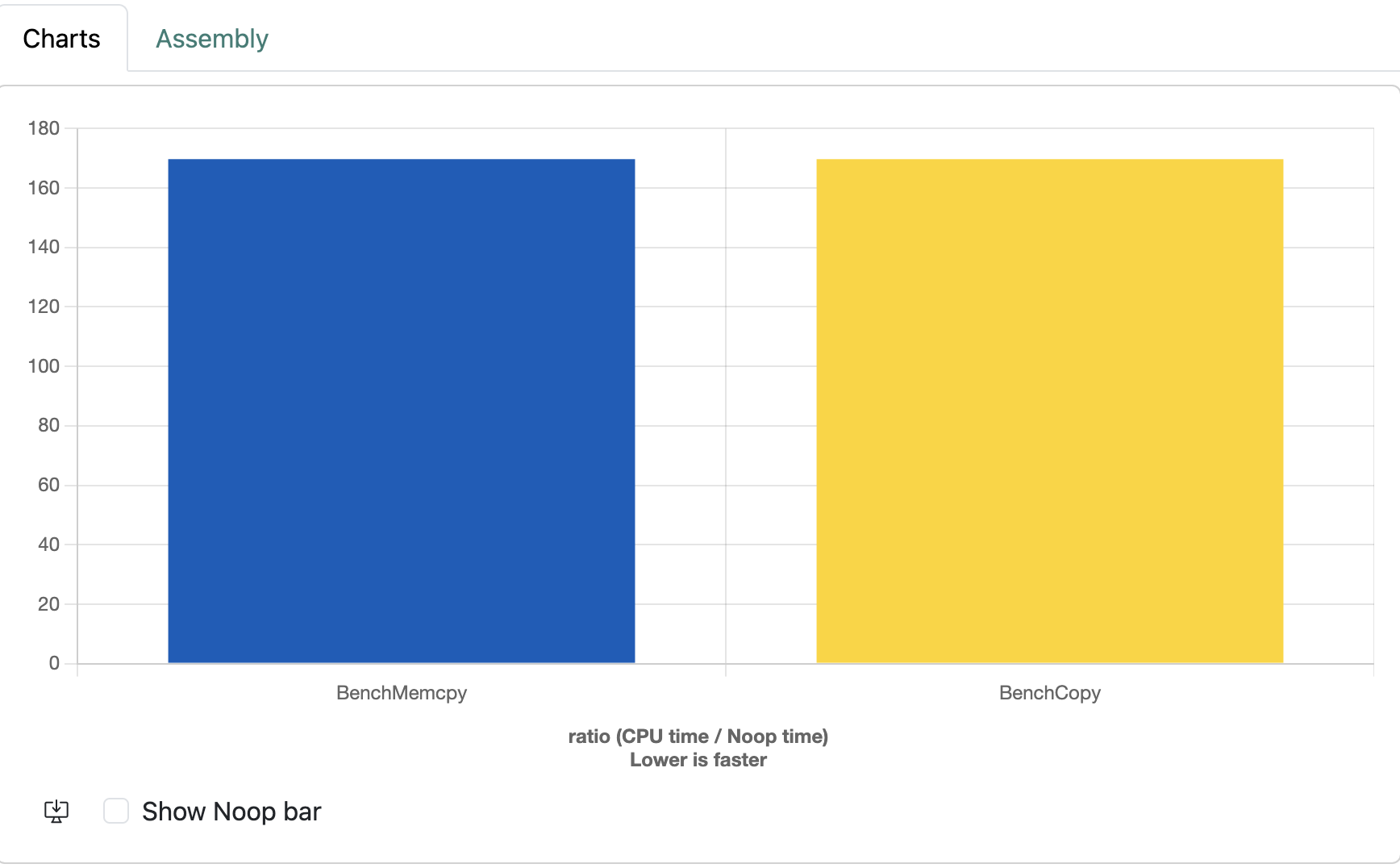
I ran a benchmark on quick-bench; as you can see, there is no significant difference in performance.
How to Choose?
In a real project, choosing between memcpy and std::copy depends on the specific requirements. If you are dealing with POD types and want to stay flexible, choosing std::copy is the wiser option. For most application scenarios, std::copy provides a more general and safer way to copy data.
When chasing the last bit of performance, however, you can consider memcpy, especially when processing large volumes of data. But when making that choice, be sure to take the actual application scenario into account and use profiling tools to test and optimize thoroughly.
All in all, memcpy and std::copy each have their strengths and weaknesses, and we need to weigh performance against flexibility based on the project's concrete requirements. In practice, choosing the safer and more general std::copy is usually the more reliable option.
Related Topics
- C++ string SSO Performance Test | C++那些事
- C++ Polymorphism: Virtual Functions, CRTP, and variant | C++那些事